1The transformation office
There is a floor in every large company where the transformation lives. It has a wall of coloured cards arranged in waves, a countdown to a go-live written in marker, a name with the word programme in it and a vocabulary borrowed from an army: war room, command centre, tiger team, wave three. The people in the room have never used the software the cards describe, and the people who will use it have never seen the room. I sold into that floor for fifteen years, and I watched the same programme launched under three names in the same company while the process it was meant to transform carried on underneath it, unchanged, in the spreadsheet everyone actually used.
Digital transformation was always a scam. The idea that bits could transform a company on the scale that steam and electricity transformed industry is flawed on its own terms, and we forget that the companies which launched those technologies were rarely around to reap the benefits: most of the American railroads that built the network went bankrupt building it, and the average company’s tenure in the largest stock index has fallen from more than thirty years in the 1970s to a forecast of under twenty in this decade.1 A technology either extends the business model a company already has or rewrites the rules of the game it is playing, and it is rarely in the middle. There is almost never a planned road from one to the other, and the wall of cards is a map of a road that does not exist.
2The revolutions came from play, because play was cheap
For two decades we have described transformation in military and engineering language, and more recently in the language of agile, of sprints and boards and stand-ups, all of it a way of delivering software to the enterprise as if it were a bridge. Most of the real digital revolutions came from somewhere else. The web was the domain of academics for a few years before teenagers made it their playground. The Silicon Valley myth of the college dropout is a story about creativity, not about an industrial programme. Almost everything we now think of as ground-breaking was hacked together by obsessed people in bedrooms and garages rather than in corporate laboratories, and the reason is not romantic; it is the unit economics of a cheap experiment.
When the personal computer and then the internet became cheap, anyone could try a new service for the price of a weekend, and the thirty-year boom in services that followed came from millions of those weekends, most of them failures. Economists still struggle to count the value of the free services that boom produced, because a search engine that costs nothing shows up in no ledger, and the best attempts to measure what people would need to be paid to give them up run to hundreds of dollars a month for one service alone.2 The lesson is older than software: a revolution is what happens when the cost of trying something falls below the cost of asking permission.
3Three waves, each more expensive to try than the last
Enterprise software had its own three waves, and each raised the price of an experiment.
The first was foundation rather than transformation. Bringing computing into a business at all was a moon-landing project, and it was run like one, because the hardware and the risk were of that scale: IBM’s machines tracked the Mercury capsules for NASA, and the methods that managed those projects, critical paths, programme evaluation charts, gates and reviews, came out of the Polaris missile programme and the engineering firms that built dams.3 The jump from paper to a database brought benefits so immediate that nobody needed creativity to justify it, and IT took control: enterprise architecture, five-year ERP roll-outs, wall-to-wall suites on premises, standardised end to end so that it could be managed as one project. The military metaphors were not an affectation; they were the tools that existed, and they fit a world where a project cost as much as a building.
The second wave was software delivered over the internet, one composed application at a time. In a decade the industry went from under a thousand business applications to more than thirty thousand, and the number a single company ran rose from a handful to well over a hundred.4 Best of breed was born, and it changed who bought: a team outside IT could choose its own tool, relate the choice to its own work and get involved in the buying, and the decision moved to the business side of the company. What also moved was the cost of selling, because now there were more stakeholders to persuade and more objections to clear than there had ever been, and for a decade all of it was paid for by zero interest rates and venture money, which made an expensive sale look like growth.
The third wave was the tool that let itself in. Product-led growth, the industry called it: applications that spread bottom-up through a company because people liked them, the chat tool, the shared document, the whiteboard, until adoption met the enterprise’s moats of procurement, security and compliance and tapered off, with paybacks that ran to four years or longer.5 Its characteristic failure has a name every vendor knows. IT is happy to run a pilot, a sandbox, a proof of concept; the pilot works; and it never scales past the first team, because it had no sponsor with a budget and could not meet the risk and compliance bar that production requires. The industry has been running pilots to nowhere for a decade, and in 2025 somebody finally counted them: the great majority of enterprise generative AI pilots delivered no measurable effect on profit and loss, and the reason was not the model but the gap between a tool and a company’s work.6
4Bytes are not bridges
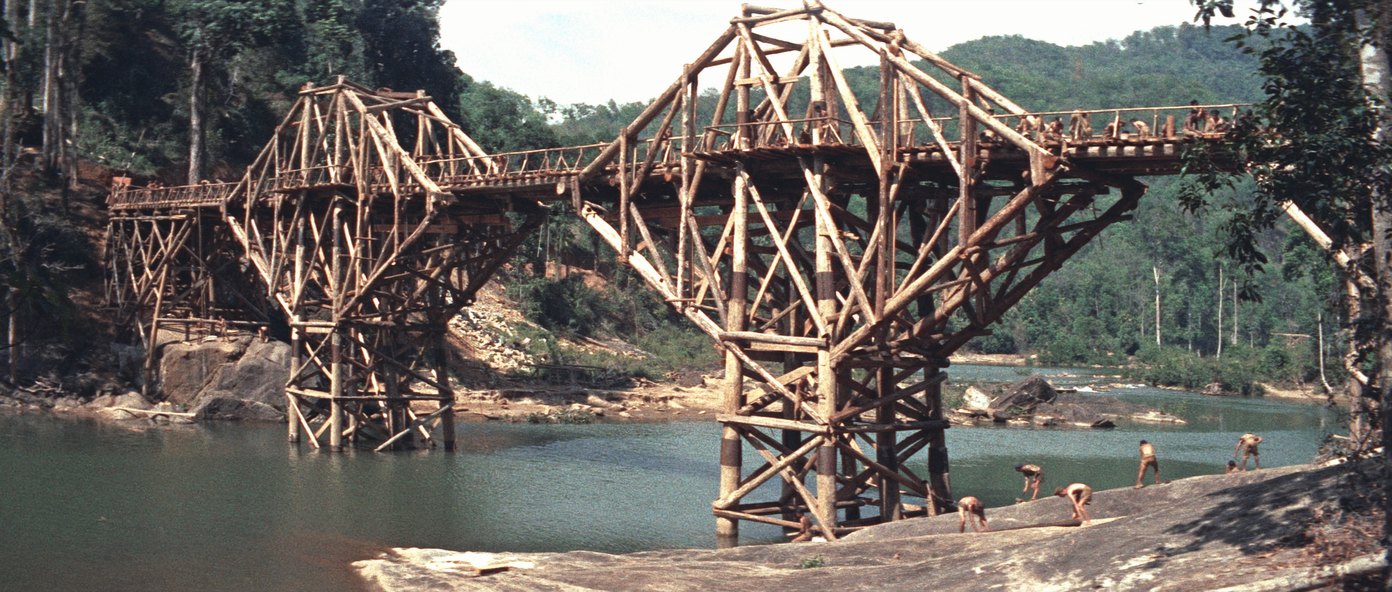
Put the waves together and the pattern is clear. Real transformation has a hard time in an environment that is risk-averse and static by design, and a harder time in one where evaluating an idea, committing to it and iterating on it is expensive at every step. If we cannot be creative and experiment, we cannot transform, and bytes are not bridges. We have spent twenty years trying to capture the revolutions of Silicon Valley with the project management of the first wave and the sales cost of the second, and between them they crush the unit economics that made the revolutions possible in the first place. The transformation office is a bridge-building crew, and the job was a playground.
The lesson is not to stop planning but to bring the unit cost of a transformation down until a company can play, and at the same time to learn from the pilot to nowhere, so that when the play works it has a road to production and to real value rather than a sandbox it never leaves. Those two requirements pull against each other, which is why nobody has met both, and meeting both is the whole design problem of the fourth wave.
5The fourth wave is a revolution and it will not be planned
Generative AI arrived in the enterprise the way the third wave did, as demos, and the question I asked in 2023 was how any of it would get from a demo to a company’s work without first fixing the transformation road it had to travel. Three years later the answer is visible, and it is not the answer the transformation office expected. The cost of trying something has fallen below the cost of asking permission again, for the first time since the garages: a person can describe an application and have it built in an afternoon, the tools that do it passed a hundred million dollars of revenue within a year of launching, and the prediction that every employee would be able to make their own software by prompting has simply come true.7 That changes the organisation, not just the software, because the experiments no longer wait for the programme.
It also changes what a company can plan, and the first evidence of that came from the companies that planned hardest. One of the most admired of them announced that its AI would do the work of seven hundred customer-service agents, and within eighteen months was hiring people back because the quality had gone where the headcount went.8 That is not a failure of the technology; it is what a revolution looks like from inside a plan: the rules changed, the plan did not, and the company found out in public.
Two things follow, and I have argued both elsewhere. The commercial model has to reach the customer through the work, priced on what was done rather than on seats, so that the vendor, the partner and the client are aligned on the day the experiment starts and not on the day the renewal is due; and the way software is made has to move to the people who know the job, with a road to production built in, so that play scales instead of dying in the sandbox.9 The coming transformation is not an evolution and it will not be more predictable than the last three; it will be less. The transformation office is the wrong room for that, because a revolution cannot be delivered in waves. The right room is the one where someone can try something on Tuesday and have it running by Friday, where being wrong costs little enough that nobody needs a general. It keeps the record of what was tried, which is the one thing the first wave got right. Colonel Nicholson built a perfect bridge, on time, with discipline the enemy admired, and stood on it at the end wondering what he had done. The companies that will still be here after the fourth wave are the ones that stopped building bridges and started building playgrounds with a road out.10