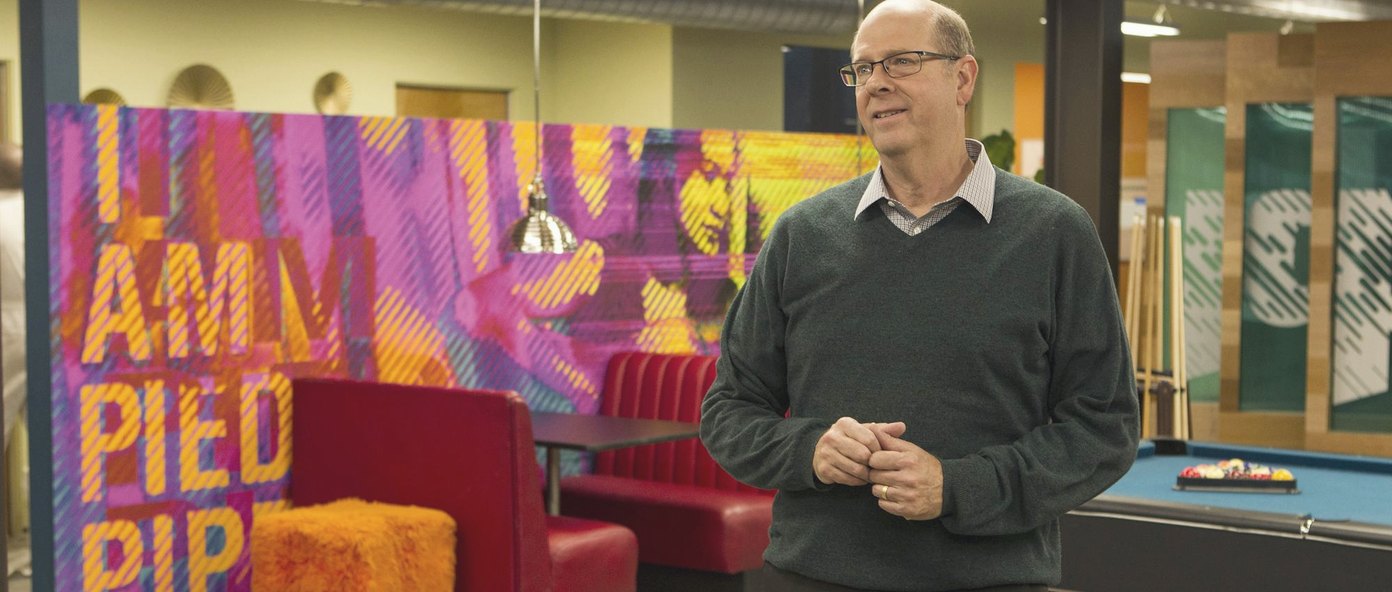
1A man of action arrives at a company he does not understand
In the third season of Silicon Valley the board of a start-up that has built a compression algorithm installs a chief executive called Jack Barker. He has run companies before, he speaks in diagrams, and within a week he has drawn the conjoined triangles of success on a whiteboard, found a way to sell the algorithm inside a metal box to enterprise buyers, and told the engineers that the product is whatever the customer will pay for this quarter. He is decisive, likeable and wrong, and the writers gave him the name the cast used: Action Jack.
In the summer of 2024 the next frontier for AI companies was the large action model. Adept, H and Orby were the names on the pitch decks, and between them and their imitators more than half a billion dollars had been raised in twelve months on an idea simple enough to fit on Jack’s whiteboard: train a model on enough recordings of people using software and it will learn to use software, clicking the buttons a person clicks, in every application a company owns, without anyone changing the applications.1 The prize was real. Companies were on course to spend a trillion dollars on software that year, four times what they had spent a decade earlier, while revenue per employee stayed flat and the headcount in IT and shared services grew, which is a polite way of saying that the last generation of software failed to deliver what it was bought for.2 We need less software and fewer people doing meaningless work, and a model that could operate the software we already have looked like the shortest road there.
I wrote then that it was much harder than it seemed, and two years later I would put it more strongly. The difficulty was never the model. It was the context the model was being sent to act in, and Action Jack is the patron saint of acting in a context you do not understand.
2The enterprise is not Phoenix, and it shoots back
Automating enterprise software sounds easier than building a self-driving car. Everything is already in a computer; the world is digital and controlled. It is not. A large company runs on mainframes, on PDFs of handwritten notes, on shared inboxes, on SharePoint folders nobody has opened since the merger, on fax, and on a spreadsheet from 1999 with a macro whose author has retired, all of it holding the everyday world together. The self-driving car took twenty years and more than a hundred and fifty billion dollars to reach the point where it could almost drive as well as a person, and in the month I wrote the post one of the best of them hit a telephone pole on a straight road in Phoenix.3 Actions are hard, and actions with consequences in the world are the hardest kind.
The enterprise is harder to drive in than a bad night in San Francisco, and it has a property no road has: it fights back. Put an agent on every employee’s browser to record what they do and you will meet the IT department, then the data protection officer, then the EU’s AI Act. Ask for a connection to the back-end systems and you will meet IT again. Let the model take a decision that touches the ledger and you will meet the chief financial officer, and the CFO does not laugh. A car in Phoenix has to cope with the road. An action model in a company has to cope with everyone whose job it is to stop things happening, and most of those people are right.
The fair concession, two years on, is that the cars got there. In 2026 the company whose car hit the pole carries paying passengers in several cities with nobody at the wheel, and the sneer in my 2024 post has aged worse than the argument. The argument holds because the road did not fight back and the enterprise still does.
3The data costs more than the model, and the humans cost more than the data
Suppose the war is won and the recordings are flowing. What is the model supposed to learn from: the process, the rules, the screenshots, the video? Reading a screen through a model is expensive, and interpreting what a person meant by a sequence of clicks is expensive work on top of it. A browser extension will do for consumers and will not survive a security review at a bank. And if the model is to be large, it needs a great deal of this material, which is owned by a great many vendors, an average of three hundred and seventy applications in a large company before the legacy systems are counted, each of them building its own assistant and none of them with a reason to hand over the record of how their product is used.4 Gathering that costs many times what it cost to scrape the consumer internet, before a single model is trained, and the rights question underneath it is where music was before streaming: everyone has a piece of the catalogue and nobody has a licence to the whole.
Then there are the humans, who are the hardest part. We are non-linear pattern machines carrying knowledge that is invisible to a recording. The consumer models reached their quality on human feedback and labelling done by large outsourced workforces, and that does not transfer to the enterprise, where the context and quality of the feedback are the point and the person who knows whether a purchase order was handled well is the buyer, not a contractor in another time zone. Legacy applications were not built to collect that judgement, so you build a layer to collect it, with the context of the record attached so that the feedback means something, and before long you have rebuilt most of the application from scratch in order to learn how to operate it.5
4Look, no hands
A convincing demo is easy. Adept’s early videos showed an agent working through Salesforce and buying a plane ticket, and they were as compelling as the first self-driving demonstrations were twenty years before. Three days before I published, Amazon hired Adept’s chief executive and most of its founders and took a licence to its work, which is what happens to a company with a co-author of the transformer paper and four hundred million dollars in funding when it tries to do actions top-down in the enterprise.6 H had raised the largest seed round in French history in May and lost three of its five founders by August. The device that had launched in January with a large action model on the box turned out, when people looked, to be running scripts.7 Two years on, none of the three companies on the pitch decks is what it set out to be. Adept never shipped the product; its investors were paid back and a rump of thirty people carried on under a new name for the same idea, and the founder Amazon hired left Amazon in February 2026 to start again. Orby was sold to a call-centre software company in August 2025 for an undisclosed sum and folded into a suite. H is the one still standing, with a new chief executive from Palantir, and what it sells now is models that read screens and click, which is the button-pusher under another name.8
Then the labs took the category over, and this is where the post has to be corrected in the open. In October 2024 Anthropic shipped a model that operates a computer from screenshots, OpenAI followed in January 2025, and on the standard test of using a real desktop the best systems went from finishing one task in eight to beating the human baseline inside two years.9 The button-pushing got good, and the button-pushing was never the difficulty. An agent clicking through a screen removes none of the cost of the screen, which still has to be designed, built and kept by the people who were doing that before; it adds a second user who stumbles when a button moves, and one that can be given orders by the page it is reading, a weakness OpenAI does not expect ever to be eliminated.10 It turns pixels back into the structure the application spent most of its code turning into pixels, and it pays for both translations, twelve minutes for a change of line spacing that takes a person under thirty seconds. The demo had no hands. The product has two hands and no idea what the buttons are for.
5Apple generated the world instead of driving in it
Apple is never first and is often right, and in June 2024, a few weeks before the post, it showed what it had been waiting for. Its assistant would not learn to operate applications by watching them. Every application on the phone would be made to expose its capabilities in a form the assistant could call, which Apple named App Intents, and the assistant would orchestrate what the applications had been made to offer.11 It is the difference between teaching a car to read the world and rebuilding the roads so that the car does not have to: Apple used its distribution and its control of the platform to generate the world, which is easier with today’s tools, better for the person holding the phone, and cheaper in compute than seeing, reasoning and acting, which is also why it runs on a battery.
Apple has since found out how hard even that is, and the personal assistant it demonstrated slipped by more than a year.12 The design was still the right one. Understanding a world that was not built for you is the expensive road; making the world expose what you need is the cheap one, and Apple could take it because it owns the world its assistant works in.
6Software is not bricks and asphalt
We cannot remake the physical world to suit a car. Software is not bricks and asphalt. Nothing about an enterprise application is fixed except the habits of the people who paid for it, and that is the way out of the problem: stop automating the software we have. Start from a contained problem, its data, its defined interfaces, what goes in and what must come out, and generate the application for that problem with the ability to act already inside it, so that there is no old screen for a model to learn and no button for it to find. The model that reads a screen is a bridge out of a system you are leaving; the model that writes the system is the destination.
In 2024 we called the unit of that a work block, and we said two things about it that I would still sign. Each block should be composable, so that a large piece of work is many small ones linked together rather than one large model doing everything, and each should be validated by a human who understands the outcome, so that trust in the work done by people and machines together is built in and not bolted on. The goal was never a single large action model. It was a platform for millions of small ones, and new systems of work built from the bottom up instead of a model trained to click through the old ones and reinforce every silo they made.13
The lesson of Apple and the lesson of the self-driving car are the same lesson: the intelligence is cheap and the world it acts in is the expensive part, which is why the world is what you design.14 Action Jack was not wrong to act. He was wrong to act in a context he had not built and did not understand, and the fix was never a smarter Jack. It was a company he could understand, made so that his actions had somewhere honest to land.15